Shrinking whales and warning signals
Our new paper in Nature Ecology & Evolution, told by its first author.
As with, I suspect, an embarrassingly high number of scientific papers, this one was conceived over a mug of something warm and caffeinated. But unlike most of my other publications, I finally have something charismatic to talk about!
Whales are big news (pun intended), and the commercial hunting of whales is a sensitive and emotive topic. There is what could probably be described as a collective embarrassment about the mass slaughter carried out during the 20th century, and the collapse of whale populations around the world that followed. However, a by-product of this generally frowned-upon practice, and some frankly anally retentive bookkeeping, is an exceptional record of the whales caught during this period. The International Whaling Commission required every whale hunted to be written down, with roughly where it was caught and how big it was. The result is a staggering record of over 2.8 million whales caught from 1900 onwards.
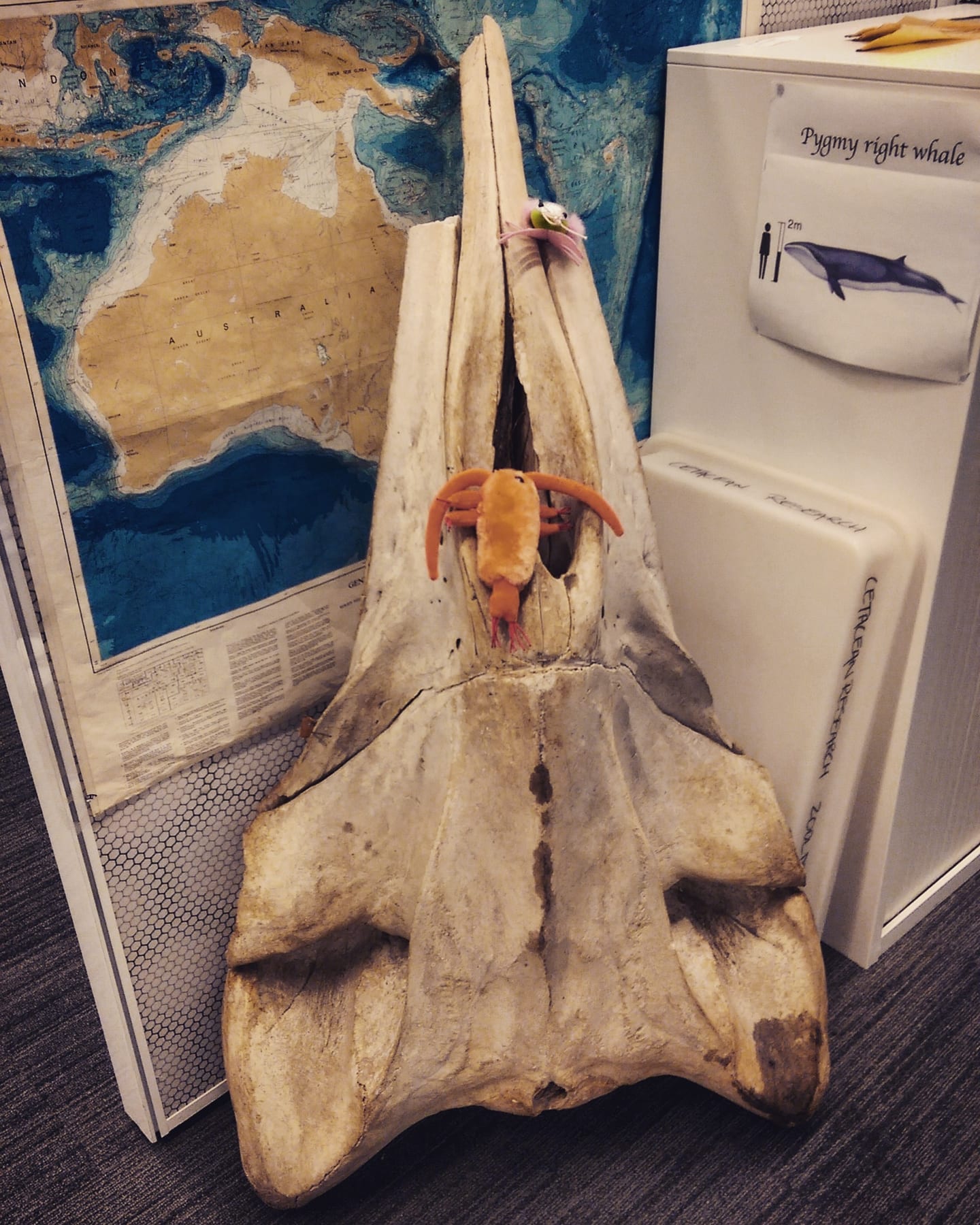
Now, the reason I know all of that is that caffeinated beverage, in a small café in Hobart, during a visit to the University of Tasmania’s Institute for Marine and Antarctic Studies. The visit was meant to test, on real population collapses, a method for predicting population declines. It combines classic early warning signals, which are changes in the numbers of animals that tend to show up before a crash, with changes in traits such as body size, an idea Arpat and I had published the year before. Our original plan was to simulate populations collapsing from overharvesting and look for warning signals before the collapses happened. But the whole point of early warning signals is to use them for species we want to protect. While brainstorming, we realised that the data might already exist: records of populations before a documented collapse, including the body size of individuals. And so this paper was born. We found warning signals, in both the numbers and the body size of whales, up to 40 years before whale populations collapsed.

For me, a few really interesting side results came out of this. The first was the sheer scale of whaling during the 20th century: at its peak, over 30,000 blue whales were killed in a single year, with similar peaks in the other three species we looked at. So perhaps it shouldn’t have been as surprising as it was to see dramatic changes in the body size of these whales: sperm whales caught over an 80-year period got more than 4 metres shorter. What fascinates me is how the way each species lives interacts with the way people hunted it. Sperm whales shrank steadily over time, probably because they are relatively slow. In faster species, the whales landed first got bigger, as whaling technology improved, and then smaller, once all the large individuals had been removed.

In many ways this paper felt cathartic: we can use data from a barbaric period of commercial excess to develop and test methods that might help with today’s biodiversity crisis, and that feels good. We are still a long way from making perfect predictions about the fate of wildlife in a world shaped by people, but every step towards this goal helps.
This paper was made possible by a Swiss National Science Foundation International Short Visits grant, and an ERC Starting Grant (#337785) to Arpat Ozgul. It is part of our work on early warning signals.