About the group
The Population Ecology Research Group (PopEcol) was established in 2012 at the Department of Evolutionary Biology and Environmental Studies of the University of Zurich and is led by Arpat Ozgul. A central theme of our work is how natural populations respond to temporal and spatial variation in their environment. These responses take many forms, demographic, phenotypic, phenological and behavioural, and we study the ecological and evolutionary mechanisms behind them to better predict population persistence in changing environments.
How we work
Most of our research builds on long-term, individual-based studies, in which animals are recognised and followed throughout their lives. We follow individuals with GPS collars, camera traps, photographic identification and capture–mark–recapture, and we complement fieldwork with laboratory experiments on short-lived organisms such as rotifers. To make sense of these data, we integrate ecological and evolutionary theory with a rich biodemography toolset, from integrated population models to individual-based simulations.
Our study systems range from the Kalahari and the Okavango Delta to the Swiss Alps; the research page has a map of our field sites and of the systems we have published on with colleagues.
People
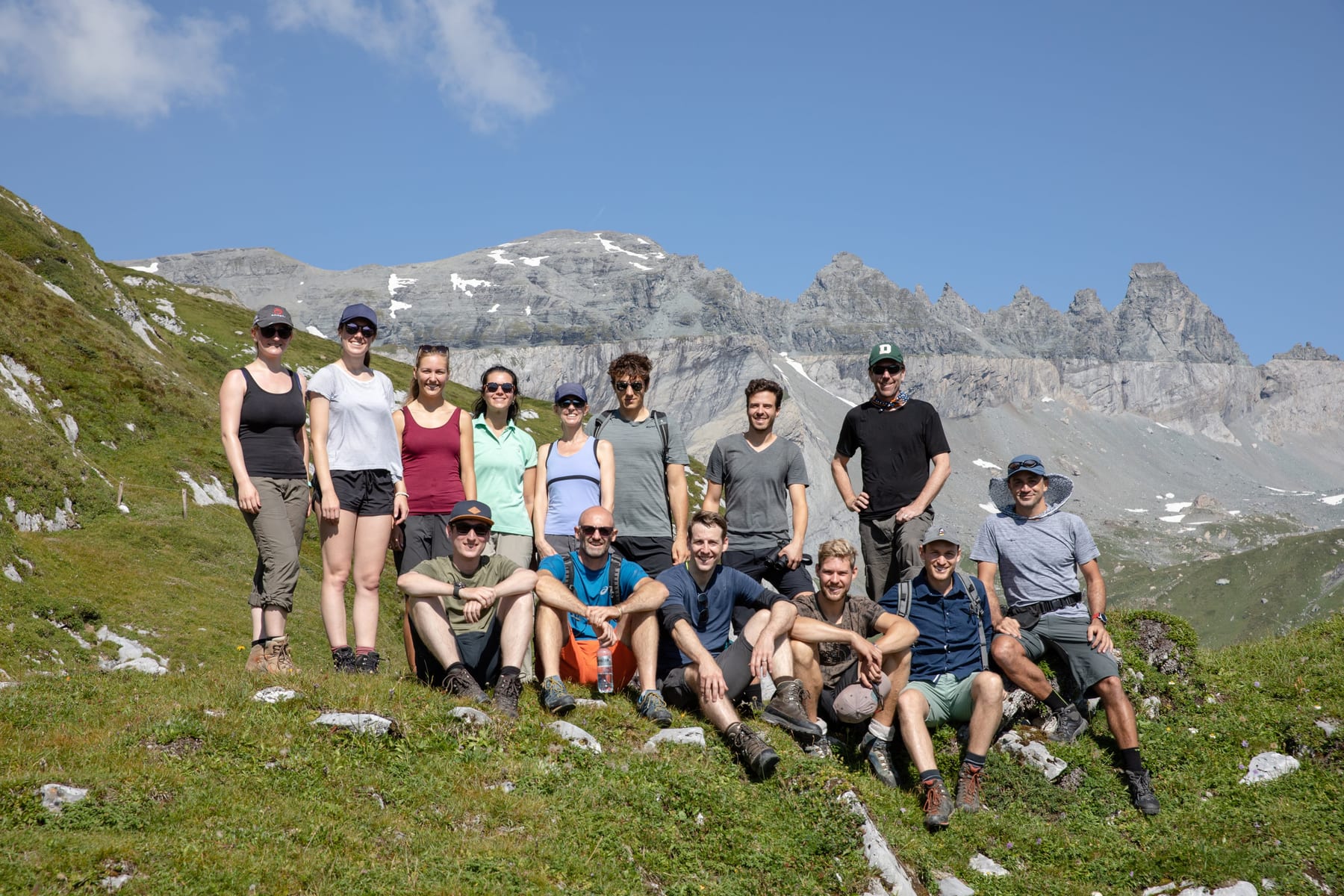
The group brings together researchers, staff and students at all career stages; meet them on the team page, and former members under alumni. We teach in the Biodiversity programme at UZH.
Partners
Much of our work is done together with partners in conservation and wildlife management, including Wild Entrust (formerly Botswana Predator Conservation), the Wild Nature Institute, the Kalahari Research Centre, Zoo Zurich, the Swiss National Park, and info fauna (karch). Each project page names its collaborators.
Funders
Our research has been funded by the University of Zurich, the Swiss National Science Foundation (including Ambizione fellowships), the European Research Council, the EU Marie Skłodowska-Curie Actions, BiodivERsA and the AXA Research Fund, together with the National Geographic Society, the Basler Foundation for Biological Research, the Parrotia, Jacot and Temperatio foundations, the Albert-Heim Stiftung, Zoo Zurich and many other zoos and conservation organisations. We are grateful for their support.