Long-term demography of snow voles in the Swiss Alps
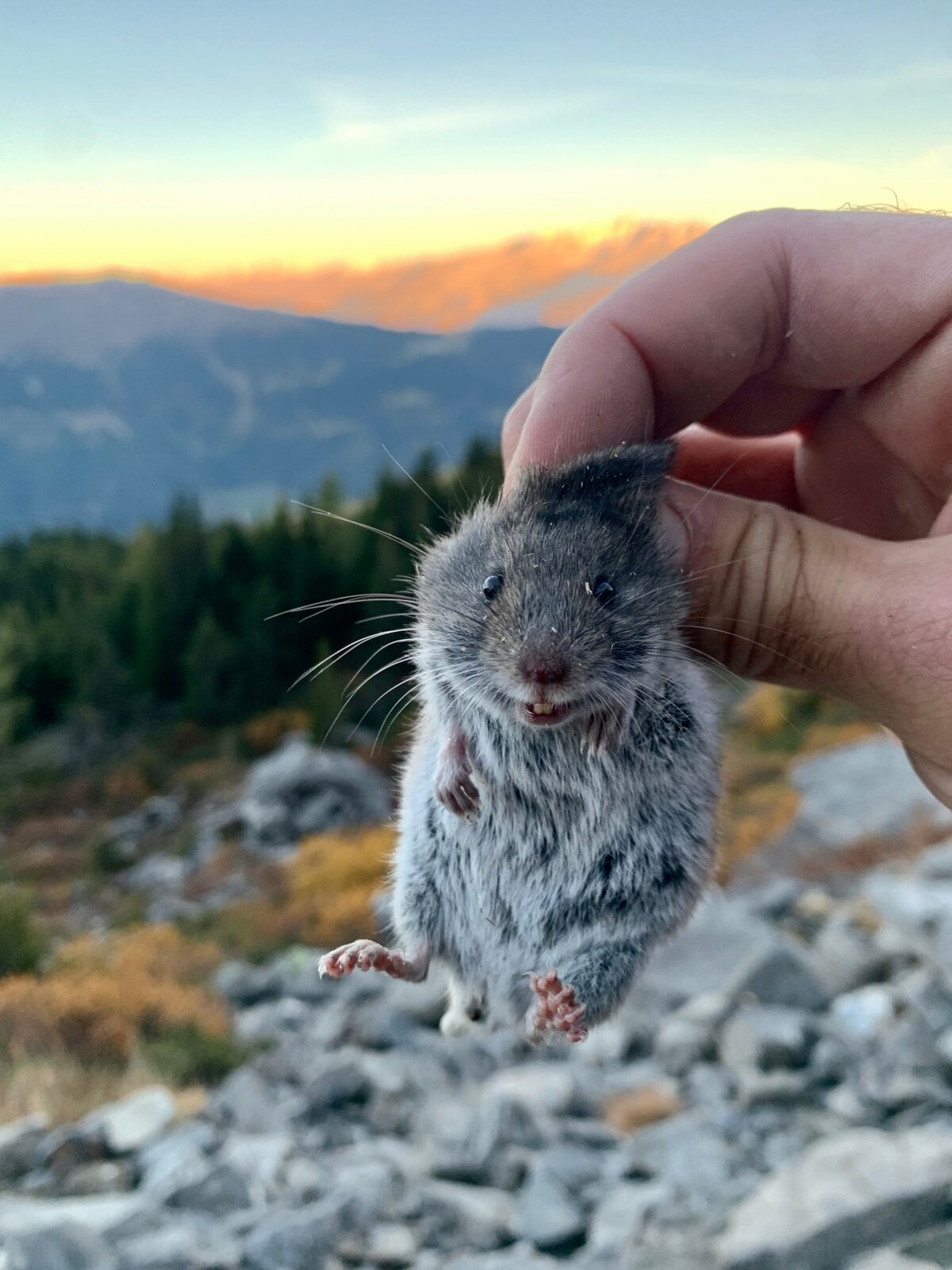
A population of snow voles (Chionomys nivalis) has been studied since 2006 on an alpine scree slope near Churwalden in the canton of Graubünden, at about 2,000 m. Snow voles are small rodents of rocky mountain habitats, active under the snow in winter and breeding during the short alpine summer. Because the climate is warming particularly fast at high elevations, a long-term, individual-based study of a population living close to its environmental limits offers a rare view of how alpine mammals respond to changing seasons.
The study was set up in 2006 at the University of Zurich by Peter Wandeler. Erik Postma’s group later took over the fieldwork, and the PhD research of Timothée Bonnet on natural selection and the evolution of body mass in this population showed how quickly a wild population can respond to environmental change. Since 2018, our group has led the study, in collaboration with Erik Postma and Timothée Bonnet.
How we study them
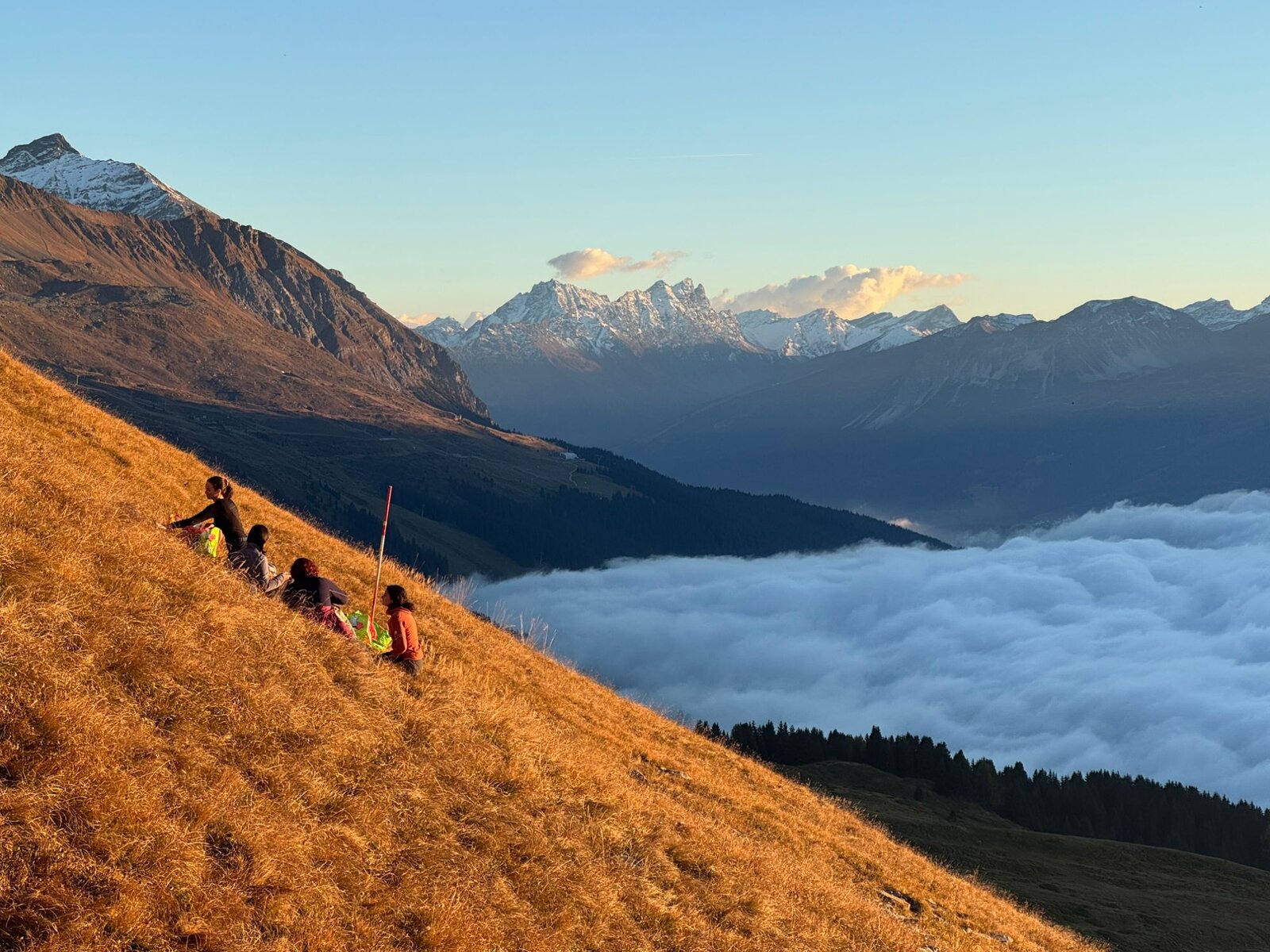
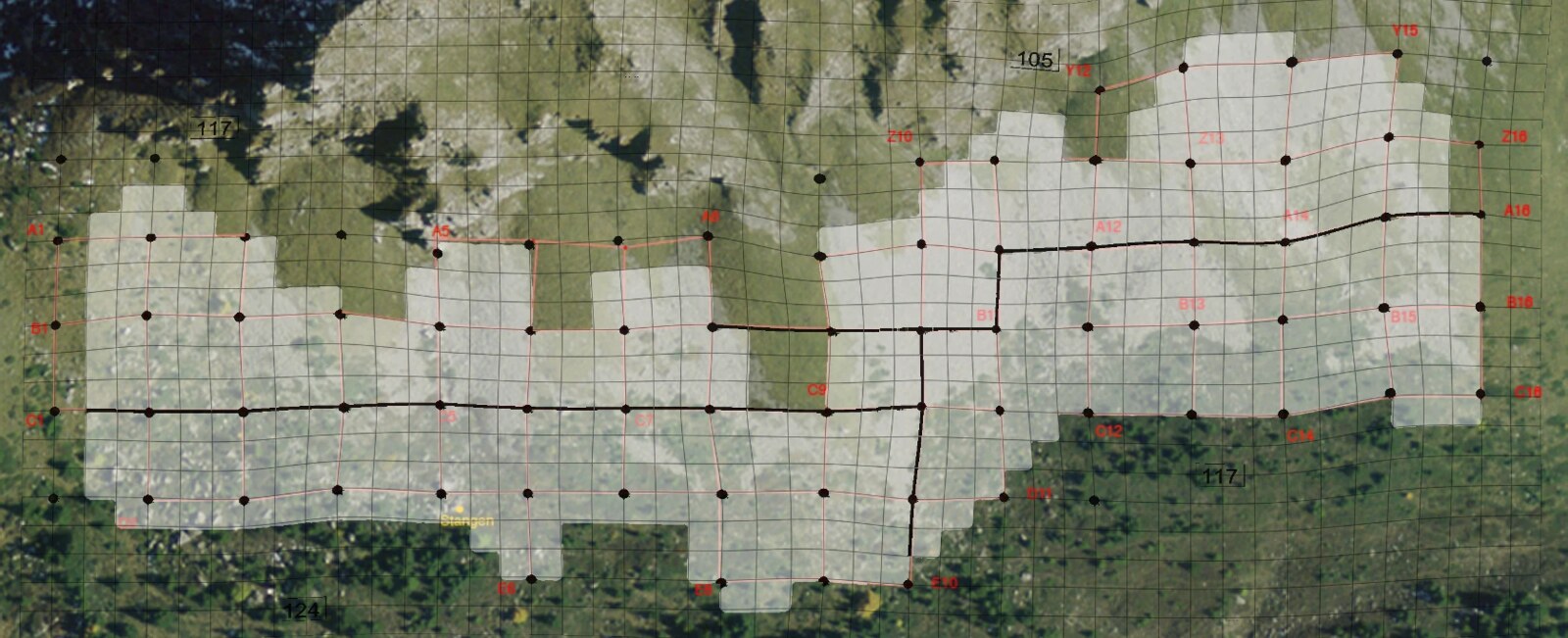
The study area is a west-facing scree slope of about 4.5 hectares, divided into four sections and covered by a 10 × 10 m grid with more than 450 trap locations. Twice a year, in early summer soon after snowmelt and in late summer before the first snow, we set live traps across the grid. Every vole caught is identified by a small PIT tag, and we record its sex, age class and body mass before releasing it where it was caught. Over almost twenty years, this has produced more than 4,600 captures of over 1,000 individually known voles.
Questions
- How do the timing of snowmelt and the length of the growing season shape survival and reproduction?
- How do summer and winter each contribute to the year-to-year dynamics of the population?
- Which demographic processes, survival, recruitment or immigration, drive long-term changes in population size?
- What do these processes imply for snow voles under future climate change in the Alps?
To answer them, we combine the capture histories with local snow and weather records and remote-sensing data on vegetation, and analyse them with Bayesian capture–recapture and population models.
Students
The snow vole fieldwork is open to students through the field course EEE220 Practical Population Ecology – Studying Snow Voles in the Alps. The project has also supported MSc theses on the climatic and biotic drivers of snow vole demography (Steffen Mink, 2020; Ivana Arapovic, 2026); see Theses.
In collaboration with:
Erik Postma (University of Exeter)
Timothée Bonnet (CNRS, Centre d’Études Biologiques de Chizé)