The walk of life: African wild dog dispersal and what it means for management and conservation
The African wild dog is Africa’s most endangered large carnivore. Fewer than 6,000 survive in the wild. Wild dogs need huge areas of mostly undisturbed land, so they suffer badly when their habitat is lost or cut into pieces. That is why it matters that wild areas stay connected, both inside and between protected areas.
Young wild dogs leave the pack they were born in to find a partner and a territory of their own. This is called dispersal. To protect wild dogs across large landscapes, such as the Kavango-Zambezi Transfrontier Conservation Area (KAZA), which spans five countries, we need to know where these young dogs go, and whether they survive and start new packs.
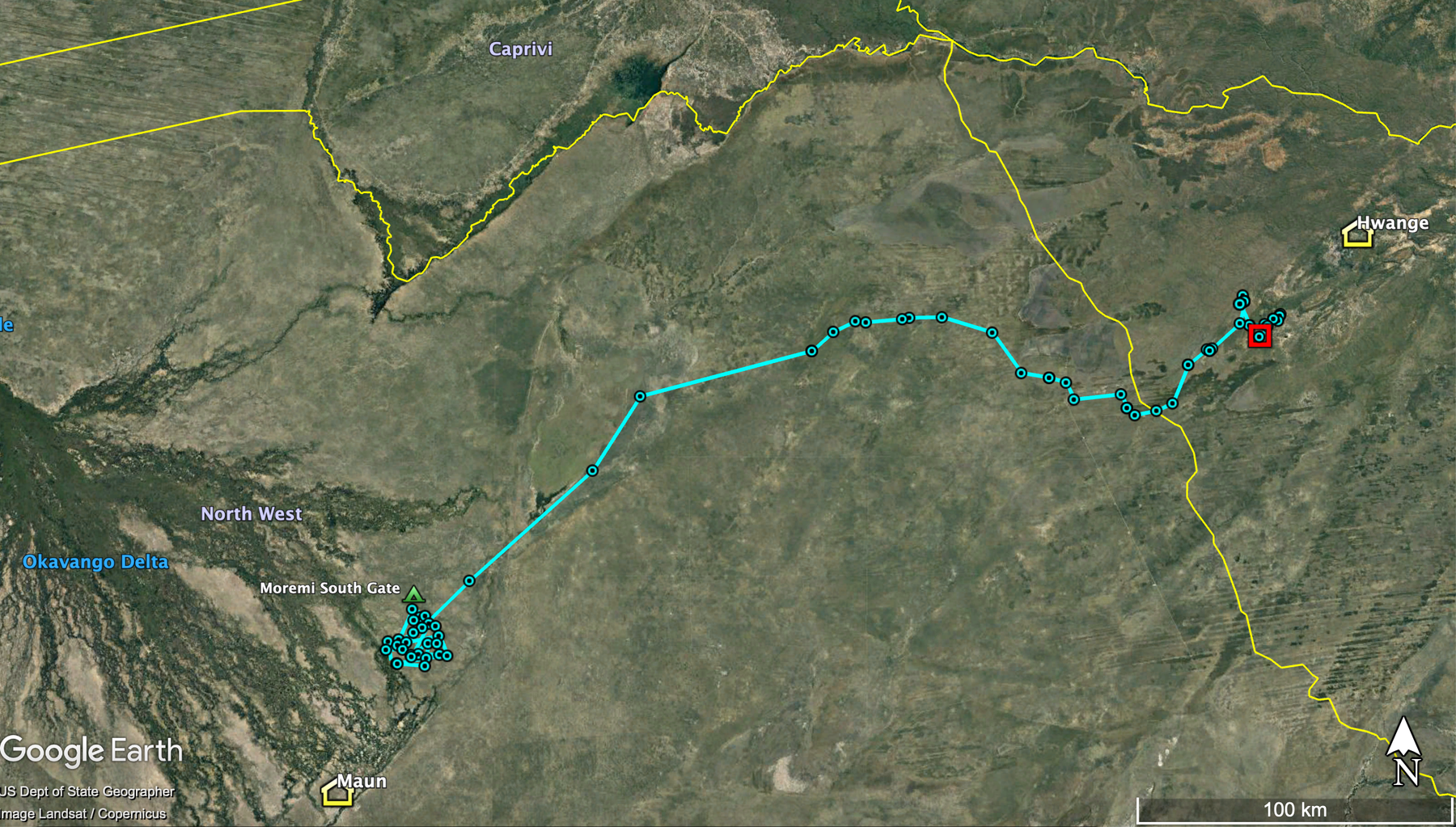
On Christmas Day 2018, we watched, for the first time in such detail, wild dogs disperse across a national border: from Botswana’s Okavango Delta to Zimbabwe’s Hwange National Park.
On 16 December 2018, four sisters left their pack just outside Moremi Game Reserve in Botswana. The pack is part of a long-term study and is followed closely by our partners on site, the Botswana Predator Conservation Trust. The group is a little unusual: the four females have the same mother but were born in three different litters, in three years in a row. They walked east in an almost straight line and crossed into Zimbabwe after an astonishing 280 km. They then carried on into Hwange National Park, covering 360 km in only nine days!
Thanks to the Zimbabwe-based Painted Dog Conservation, we know that all four are alive and in good condition. They have slowed down in the past few days, so we expect them to meet unrelated males soon. Forming a new pack and settling in a new territory is the goal of dispersal. When it works, it links populations (and their genes) and lets wild dogs return to areas where they had disappeared.
The journey also shows how important Botswana is for conservation across borders in KAZA, and how the wild dog can be an ambassador for it.
The satellite collar and the team at Painted Dog Conservation will let us keep following the sisters. Stay tuned for more news about these girls and future dispersers. More about this work on our African wild dog project page.