Alpine common toads breed on average a month earlier than 40 years ago
Animals that reproduce once a year during a short breeding season need to get the timing right. Breed too early and the offspring might be exposed to harsh conditions; breed too late and the offspring might not be able to grow enough to survive the first winter. One of the main things that sets the timing of breeding is the environment. So with climate change, we can expect animals to shift when they breed, and indeed, many studies show that animals around the world are breeding earlier. This applies to amphibians too, but little is known about those living high in the mountains.
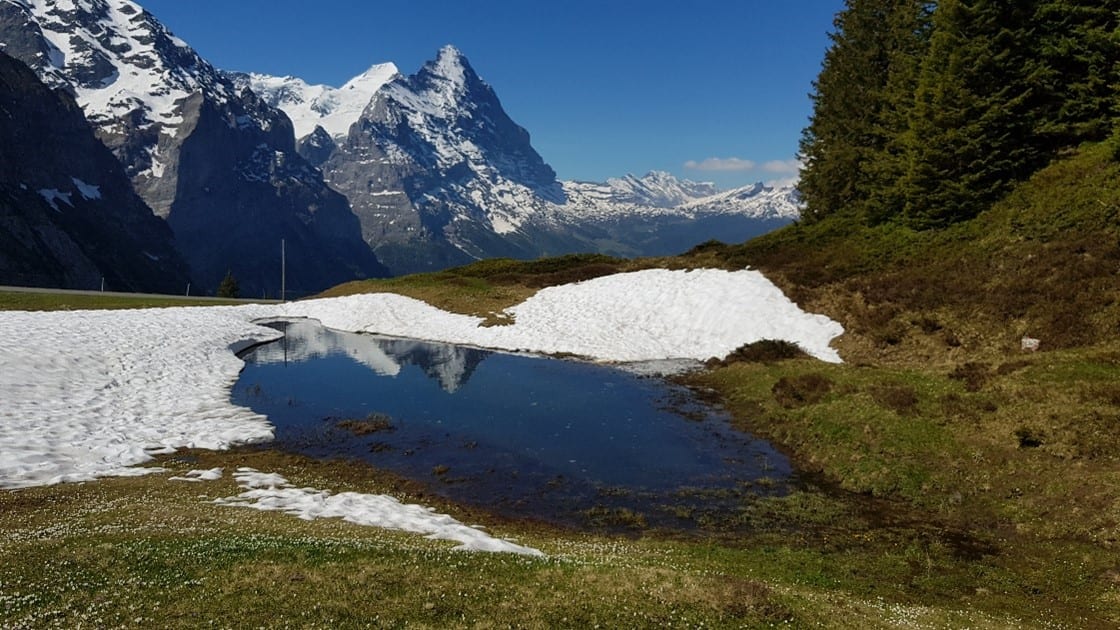
We decided to fill this gap by looking at how the timing of breeding has shifted over the past 40 years in a population of common toads (Bufo bufo) living at almost 2,000 metres in the Swiss Alps, just below the Grosse Scheidegg (Figure 1). We expected temperature and the amount of snow to play an important role. In fact, the toads can only come out of hibernation underground and breed once the snow melts and their breeding pond thaws.
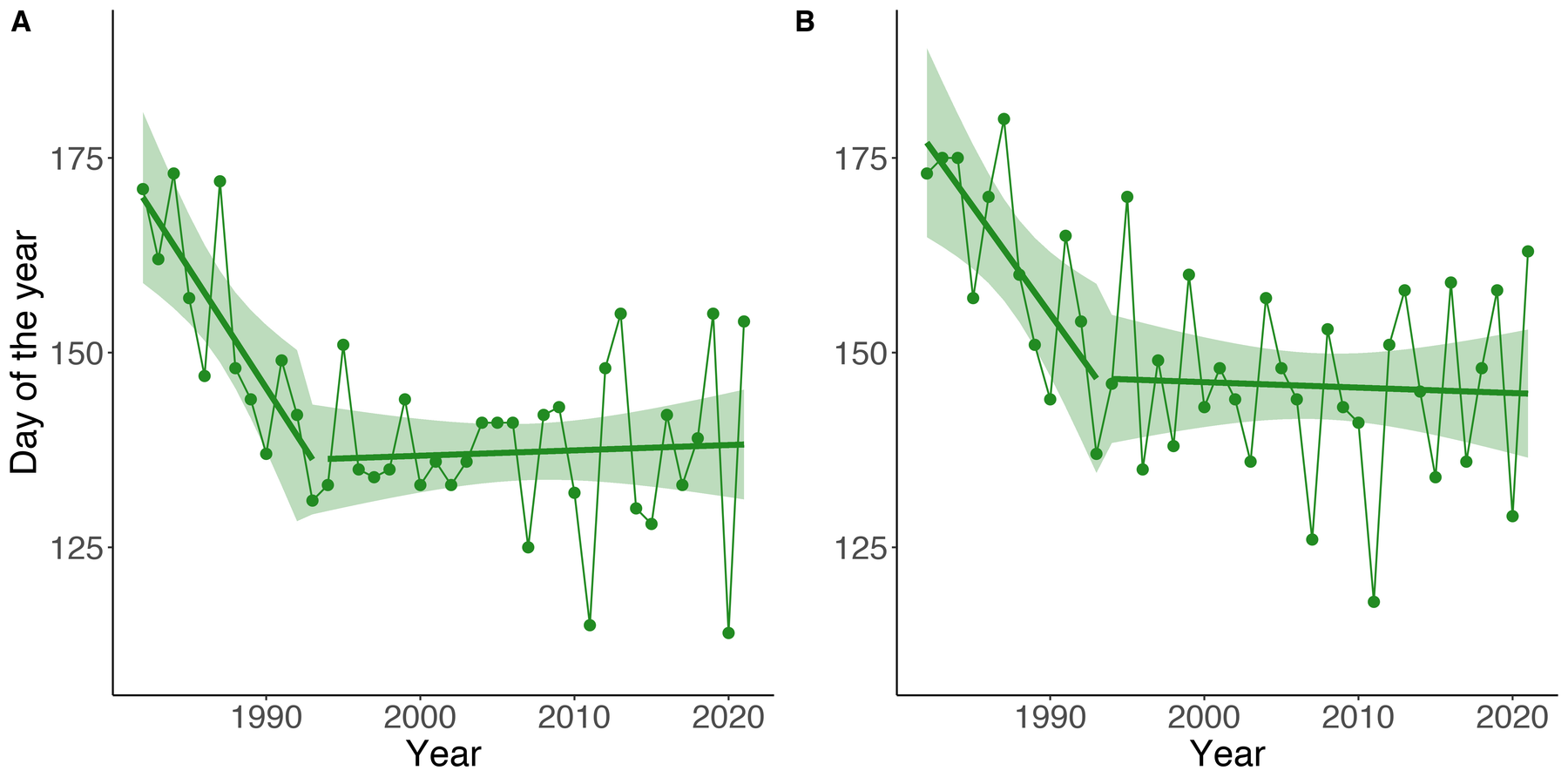
Our results matched our expectations: warm temperatures and little snow in winter and spring went with earlier breeding. Interestingly, temperature and snow cover at our study site have not necessarily changed as expected over the past forty years. They vary a lot from year to year, and to this day we see both late breeding (mid to late June) and early breeding (late April). Despite this, the toads now breed on average about 30 days earlier than in the 1980s (Figure 2). Most of that shift happened before the mid-1990s; since then, the timing has stayed about the same.
So in the mountains, changes in timing can be hard to predict: the local weather does not always follow the global trend. You can find all the details in our paper “Four decades of phenology in an alpine amphibian: trends, stasis, and climatic drivers” (phenology is the timing of yearly events, such as breeding), which I led with Arpat Ozgul, Benedikt Schmidt and colleagues. It is published in the diamond open-access Peer Community Journal, free for both readers and authors. More about our work on amphibian and reptile conservation.