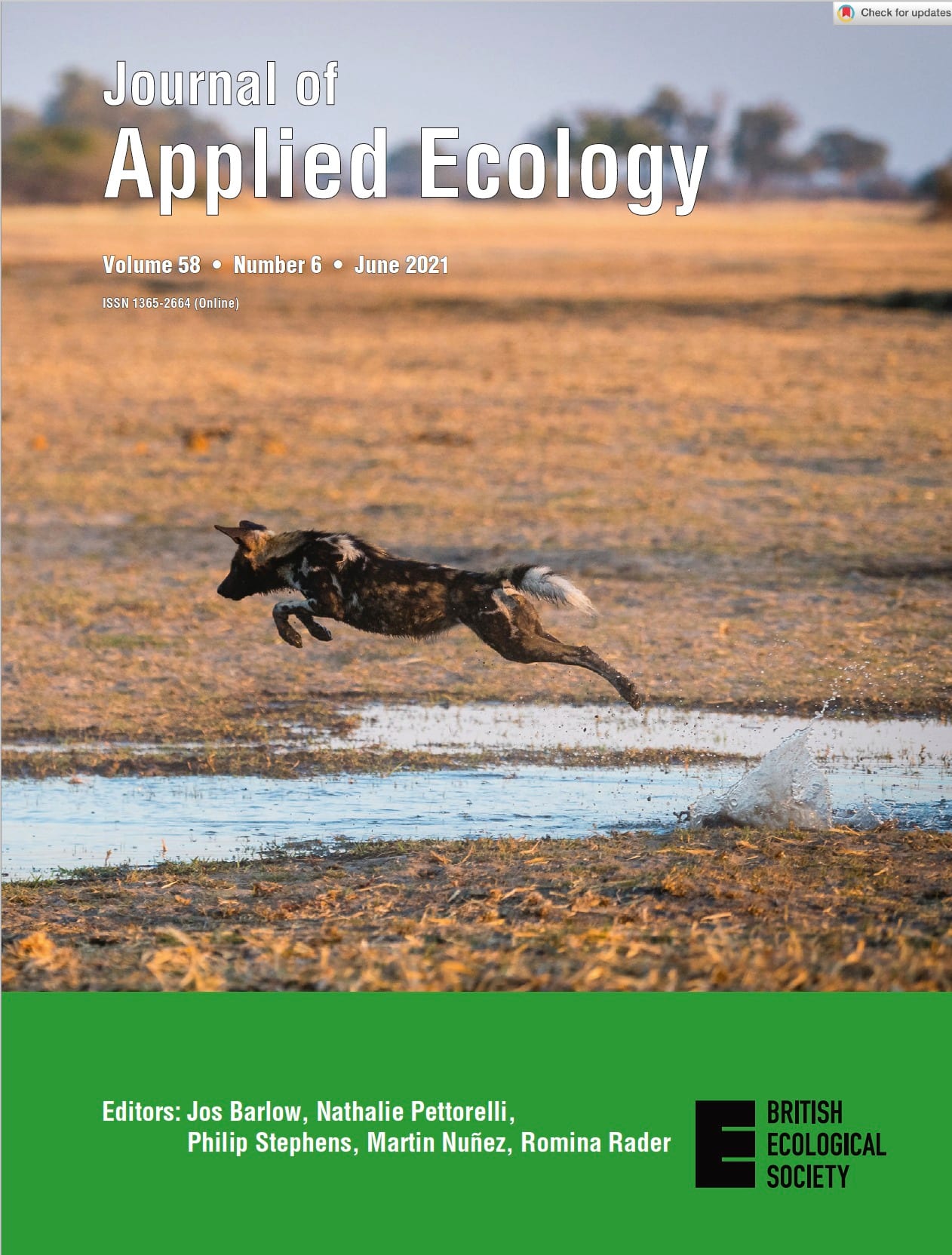
The African wild dog: an ambassador for the world’s largest terrestrial conservation area
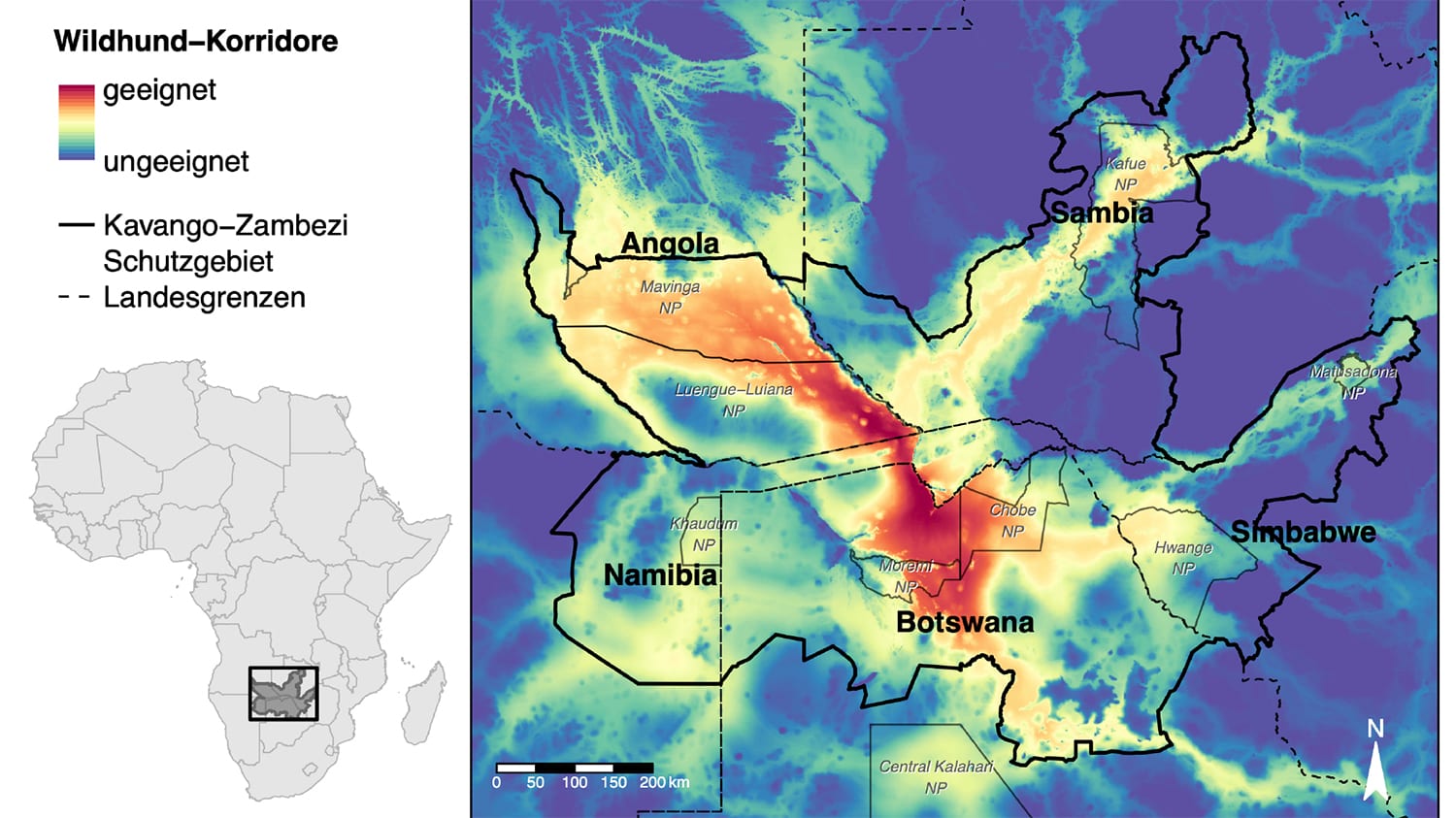
The Kavango-Zambezi Transfrontier Conservation Area (KAZA) spans five countries in southern Africa and covers 520,000 km². It is the world’s largest conservation area that crosses national borders. Its borders were drawn from expert opinion and politics, so we asked a simple question: do they actually cover the routes that wild animals use? The answer is in our latest paper in the Journal of Applied Ecology, led by our PhD students David Hofmann and Dominik Behr.
For African wild dogs, they mostly do. Between 2011 and 2019 we fitted GPS collars to 16 groups of young wild dogs as they left their family pack to find a new home (this is called dispersal). From their tracks we mapped how easy it is for a wild dog to move through each part of the landscape. Inside KAZA, moving was more than twice as easy as outside it, and the main travel corridors ran inside its borders. But some smaller routes are still unprotected, and how easy it was to move differed fivefold between the five countries. People’s activities, and rivers, swamps and open water, made the biggest difference.
Why does this matter? Setting aside land to link parks is costly, and money for conservation is limited. Wild dogs are among the most wide-ranging protected animals in the area, and their journeys let us test, with real data, whether the land set aside is in the right place. Our results also show where countries need to work together to keep, or restore, the links between their parks.
For a nice and easily accessible version, read the University of Zurich’s summary of this study, and you can download the full paper (PDF). More about this work on our African wild dog project page.