How Alpine ibex cope with hot days and summer storms
Alpine ibex are built for harsh winters, which makes summer heat hard on them. In our new paper in Landscape Ecology, led by our PhD student Adeline Bonaglia, we show how ibex in the Swiss National Park use the landscape around them to get through hot days and heavy summer rain.
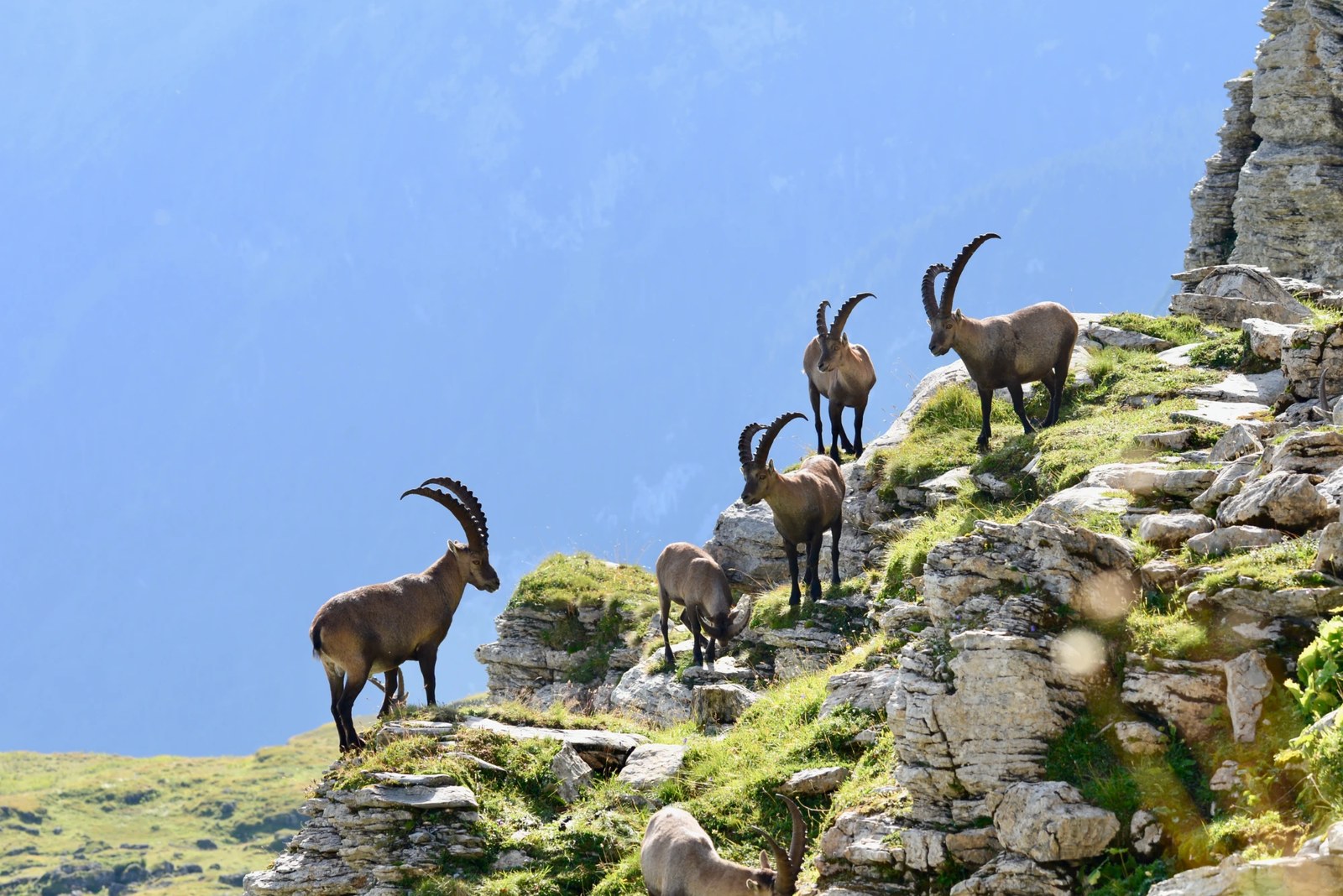
In the Alps, temperatures are rising about twice as fast as the global average, and heat waves and heavy summer storms are becoming more common. We used GPS collar data from 21 ibex, collared between 2008 and 2019 by the park wardens, and linked each step the animals took to the temperature, the rainfall and the terrain around them.
On warm days, ibex chose rugged, shaded places and less productive patches, and they covered longer distances. Rather than climbing far up the mountain to cool down, they seemed to rely on small cool spots nearby. The upward moves we saw were mostly their daily routine: lower down at night to feed, higher up during the day. When it rained hard, ibex moved downhill and onto steeper but less rugged slopes.
So ibex can adjust their behaviour to bad weather, but at a price: on hot days they give up good feeding places, and they move more. Keeping their habitat well connected and diverse may help them cope with a warmer climate.
We did the study together with the Swiss National Park, which has followed its ibex for decades, and with colleagues at the Swiss Academy of Sciences and the University of Zurich’s Department of Geography. It is part of Adeline’s PhD in our Alpine ibex project, co-supervised by Benedikt Gehr.