Rising rainfall, not temperatures, threaten giraffe survival
Giraffes in the East African savannas adapt well to warmer temperatures. However, they are threatened by increasingly heavy rainfall.
Climate change is expected to cause wildlife declines around the world. Unusual weather, combined with pressure from people, can add stress to populations that are already declining. Giraffes are endangered, but nobody had studied how climate and people affect the survival of giraffes, or of any other large African herbivore. So we did: in a decade-long study, the largest to date, of a giraffe population in the Tarangire region of Tanzania. The study area covered more than a thousand square kilometres, inside and outside protected areas. Contrary to what we expected, higher temperatures helped adult giraffes survive, while rainier wet seasons lowered the survival of both adults and calves. Our paper, written with Arpat Ozgul and Derek Lee, is out in Biodiversity and Conservation.
A first look at how weather affects giraffe survival
We measured how unusual local temperature, rainfall and vegetation greenness were in each season (compared with the long-term average), and how this related to the chance that giraffes survived. We also asked whether the weather hit giraffes harder when they also lived near people, at the edges of the protected areas.
Studying a long-lived animal that breeds slowly, like a giraffe, means following the population for a long time and over a large area: long enough to capture both the ups and downs of the weather and any immediate or delayed effects on survival. We gathered nearly two decades of local rainfall, greenness and temperature data for Tanzania’s three seasons (the short rains, the long rains and the dry season), and followed the fates of 2,385 individually recognised giraffes of all ages and both sexes over the last eight years of that period.
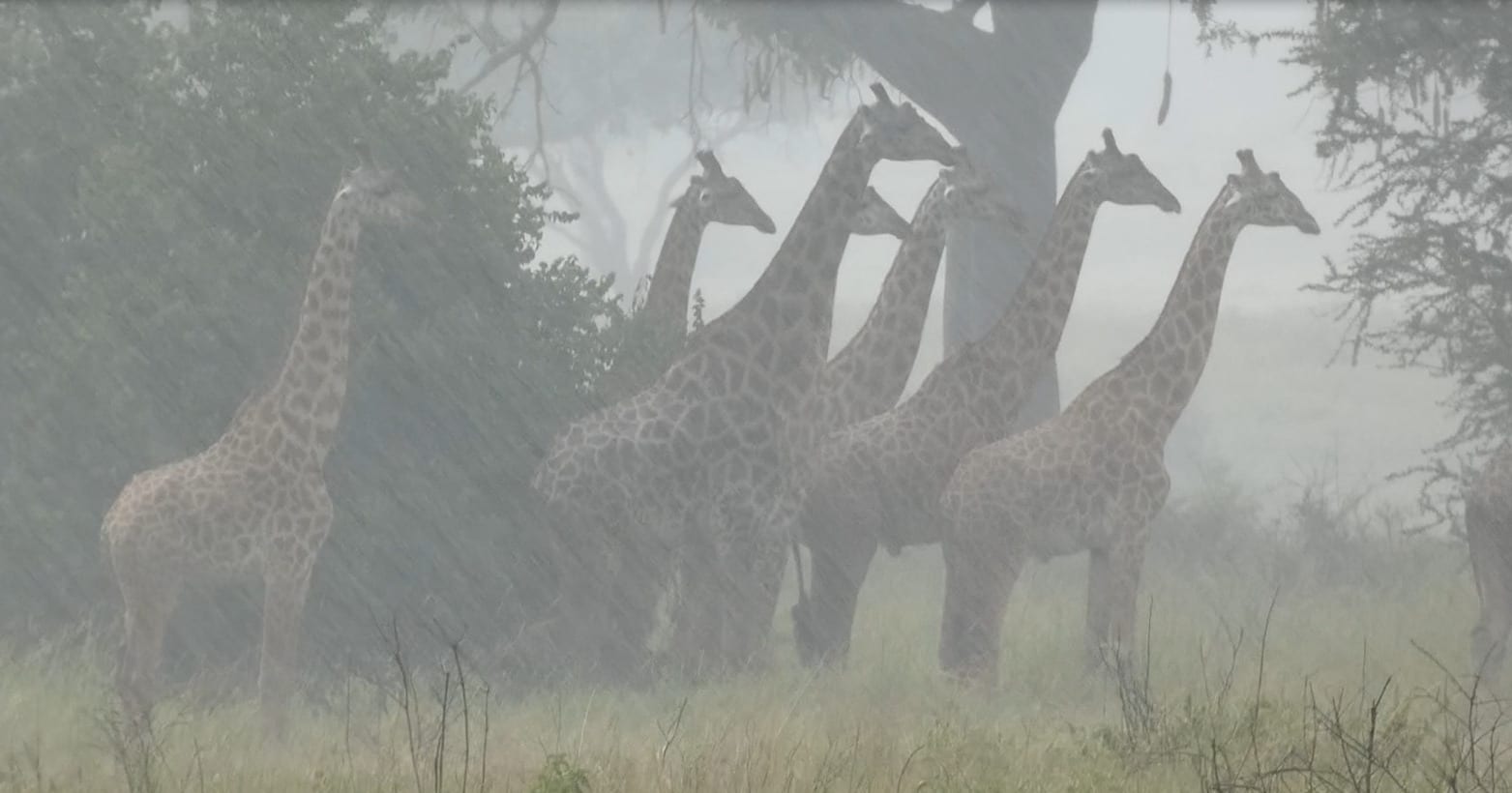
Surprising effects of temperature on giraffe survival
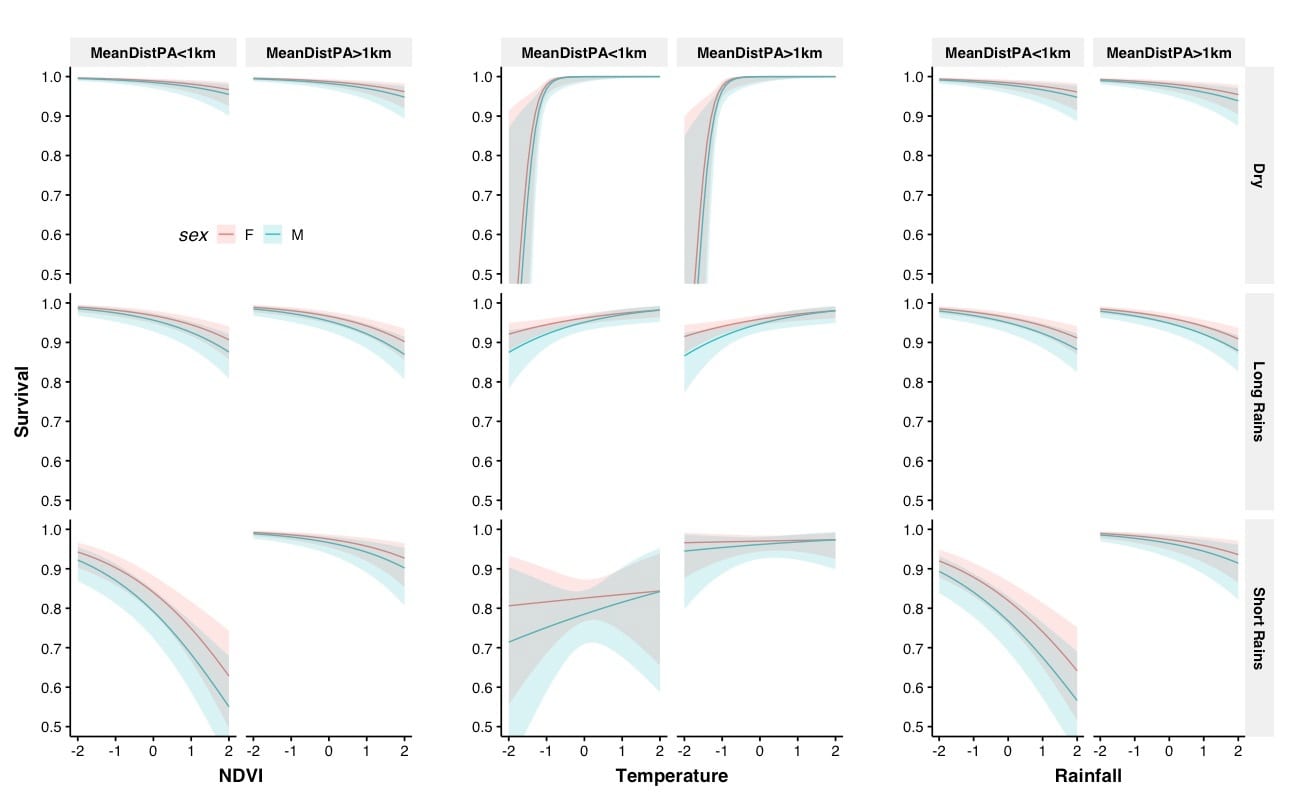
We had predicted that higher temperatures would hurt adult giraffes, because such big bodies might overheat. Instead, adults survived better when it was warmer. Giraffes have several features that help them keep cool, like long necks and legs that lose heat, special nasal passages, an intricate network of arteries that supply blood to the brain, and spot patches that give off heat. But temperatures during our study may not have gone beyond what giraffes can tolerate, and an extreme heat wave in the future might reveal a limit above which these massive animals are harmed. So we will keep watching this population.
Heavy rains may bring parasites and less nutritious food
Giraffe adults and calves survived less well in rainier wet seasons, which may be due to more parasites and disease. An earlier study in the Tarangire region showed that giraffes carry more gut parasites in the rainy seasons than in the dry season, and heavy flooding has caused severe outbreaks of diseases that kill giraffes, such as Rift Valley fever and anthrax. Adults also survived less well when the vegetation was greener, perhaps because fast-growing leaves are less nutritious.
Pressure from people adds to the stress
The effects of the weather were stronger for giraffes living near the edge of protected areas, but not in every season. Giraffes living near the edges were most vulnerable during heavy short rains. Then, diseases shared with livestock are probably more of a risk, and muddy ground makes it harder for anti-poaching patrols to get around.
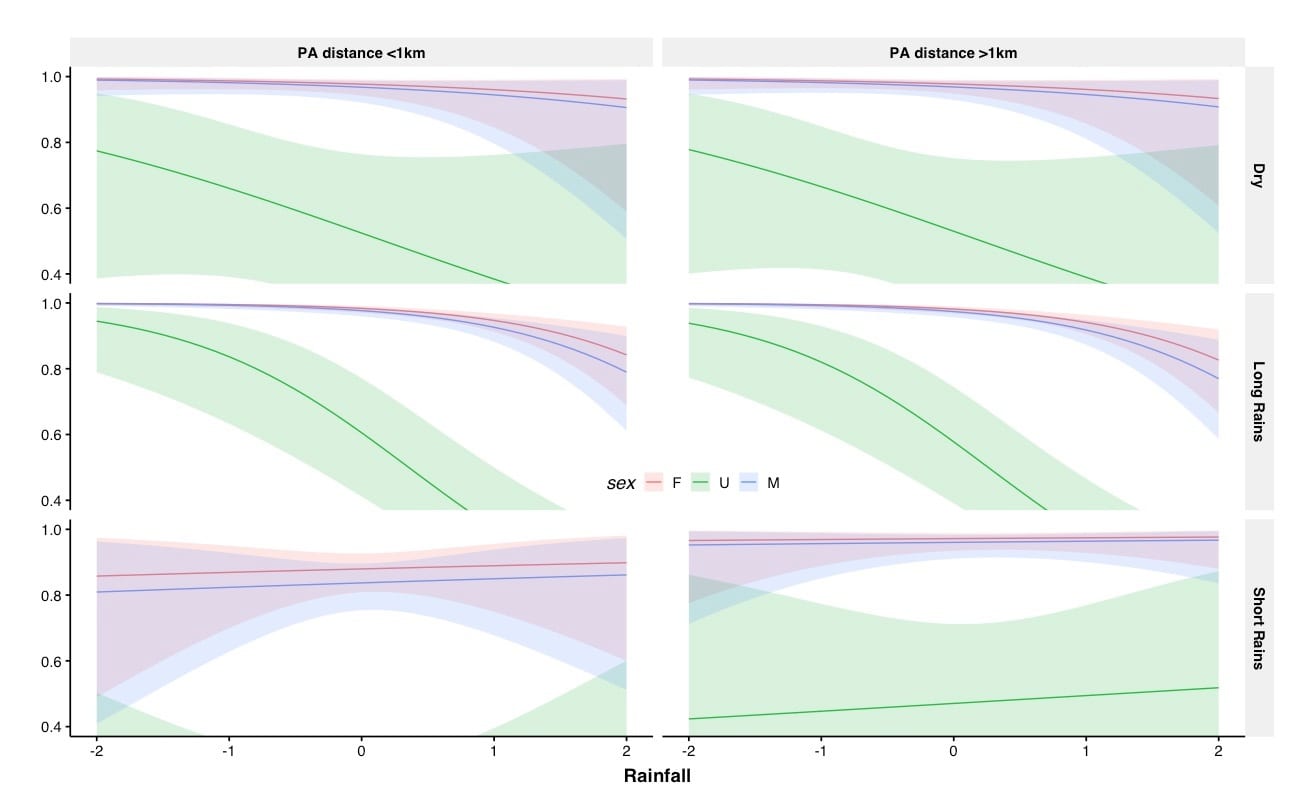
East Africa is expected to get more rain, with heavier downpours during the short rains. This will likely threaten giraffes in one of Earth’s most important landscapes for large mammals. Good land-use planning and anti-poaching work will help giraffes cope with the coming changes. This work is part of our Masai giraffe project.