Friends matter: giraffes that group with others live longer
Adult female giraffes who spend time in larger groups with other females live longer than less sociable individuals. And being sociable matters more for their survival than their surroundings or how close they live to people. That is the main result of our study of giraffes in Tanzania, out today in Proceedings of the Royal Society B.
With Arpat Ozgul from our group and Derek Lee, Damien Farine and Barbara König, we followed wild giraffes in Tanzania for five years. We compared three things that might affect whether adult females survive: their social life, their natural surroundings (food and vegetation), and people (how close they live to human settlements). Females living in larger groups had better chances of survival than more isolated ones.
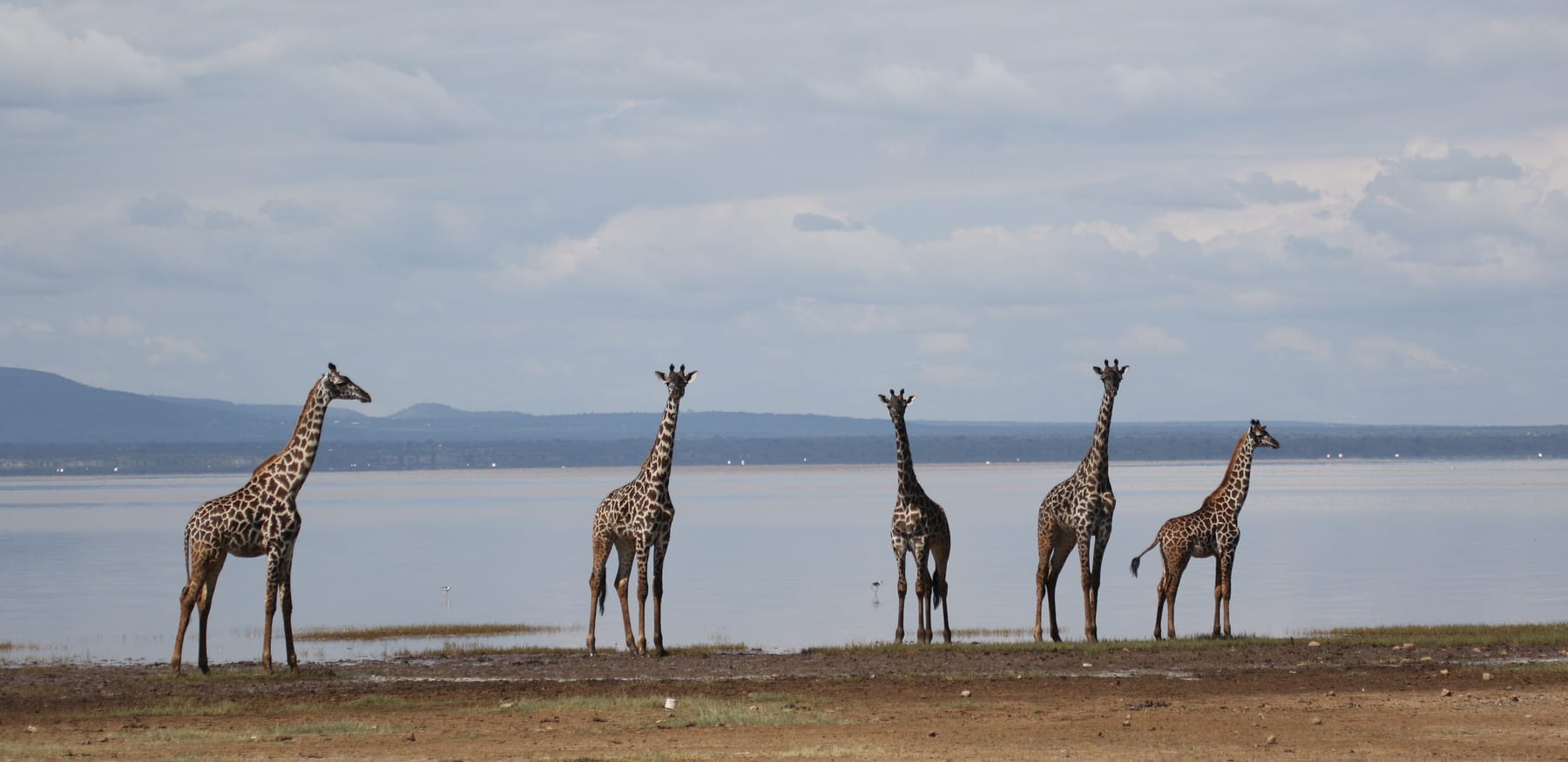
Company leads to better survival
Giraffe groups are always changing: they come together and split up throughout the day. Yet adult females keep many of the same friends over the long term. Grouping with more females, called gregariousness, is linked to better survival of female giraffes, even though group membership changes often. This side of giraffe social life matters even more than their non-social surroundings, such as vegetation and how close they live to human settlements.
The benefits of many friends
Apart from poaching, adult female giraffes probably die mostly of disease, stress or poor nutrition, and these are all linked. “Social relationships can improve foraging efficiency, and help manage intraspecific competition, predation, disease risk and psychosocial stress,” says Barbara König of the University of Zurich, senior author of the study. In other words, friends can help with finding food, with competition from other giraffes, with predators, disease and stress. Female giraffes may seek out a good number of other females to share information about where the best food is. Larger groups may also lower stress by reducing harassment from males, let mothers share the care of young, or simply feel good because familiar females are around. We also found that females living closer to towns survived less well, possibly because of poaching.
Social habits similar to humans and primates
To map the giraffes’ social lives, we used network analysis: methods similar to those used by big social media platforms. It turns out that giraffes are surprisingly similar to humans and other primates, for whom more social connections bring more opportunities. Chimpanzees and gorillas, for example, live in communities where ties between many individuals make it easier to switch feeding strategies. It seems to be beneficial for female giraffes to connect with a greater number of others and belong to a larger community, without keeping to an exclusive subgroup.
This work is part of our Masai giraffe project.