Baby giraffes hide in bushes from natural predators but have a mixed relationship with people
Masai giraffes are the world’s tallest herbivores and beloved by people around the globe, but were recently classified as an endangered species by the International Union for Conservation of Nature (IUCN). Our new paper in Oecologia, from Monica Bond’s PhD in our group and done together with Penn State University, shows how food, predators and people all influence the way giraffes group together. In particular, we pinpointed what mother giraffes need to keep their babies safe, which can help land managers protect the places most important for giraffes.
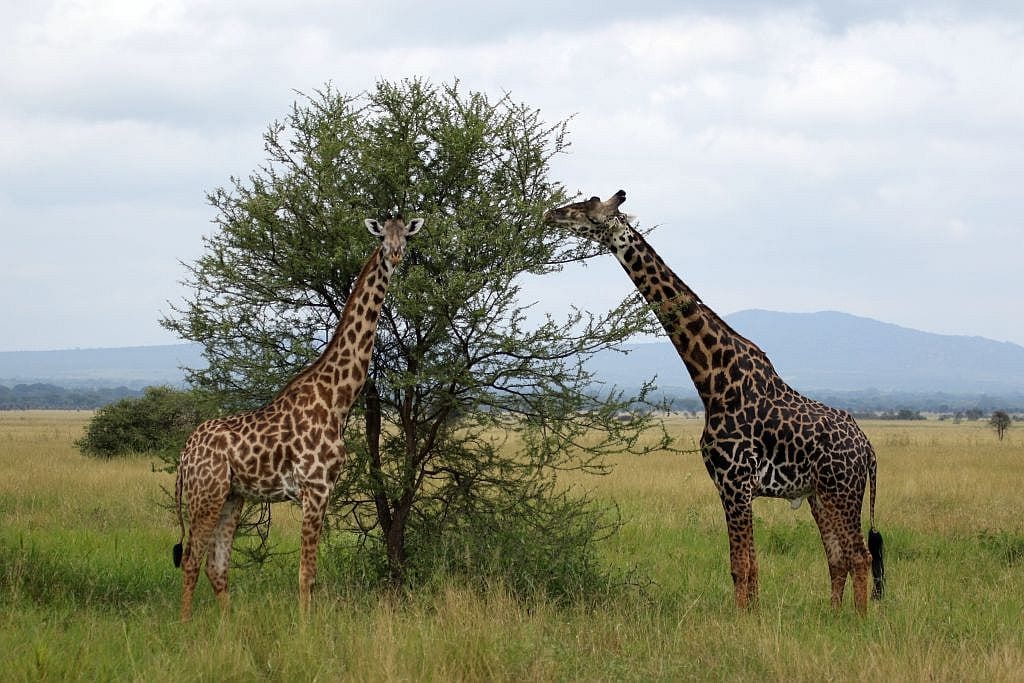
“Like all herbivores, giraffes need to find quality food to survive, but also need to avoid lions, or at least see them coming,” says Monica Bond, who led the study. Giraffes in our huge, unfenced study area in northern Tanzania can choose from among many different places to spend their time: places with different kinds of trees and bushes, and places deep inside protected parks or closer to farming towns or ranchlands where people live. There are also fewer lions outside the parks than inside. So we wondered: how do these options influence which giraffes group together, and where?
Groups of adult giraffes turned out to be all about food, and were not affected by the risk of predators. Adults formed the largest groups, of up to 66 animals, in the rainy season when food is plentiful, and smaller groups in the dry season when food is harder to find. For groups with calves, though, the risk of being eaten mattered a lot.
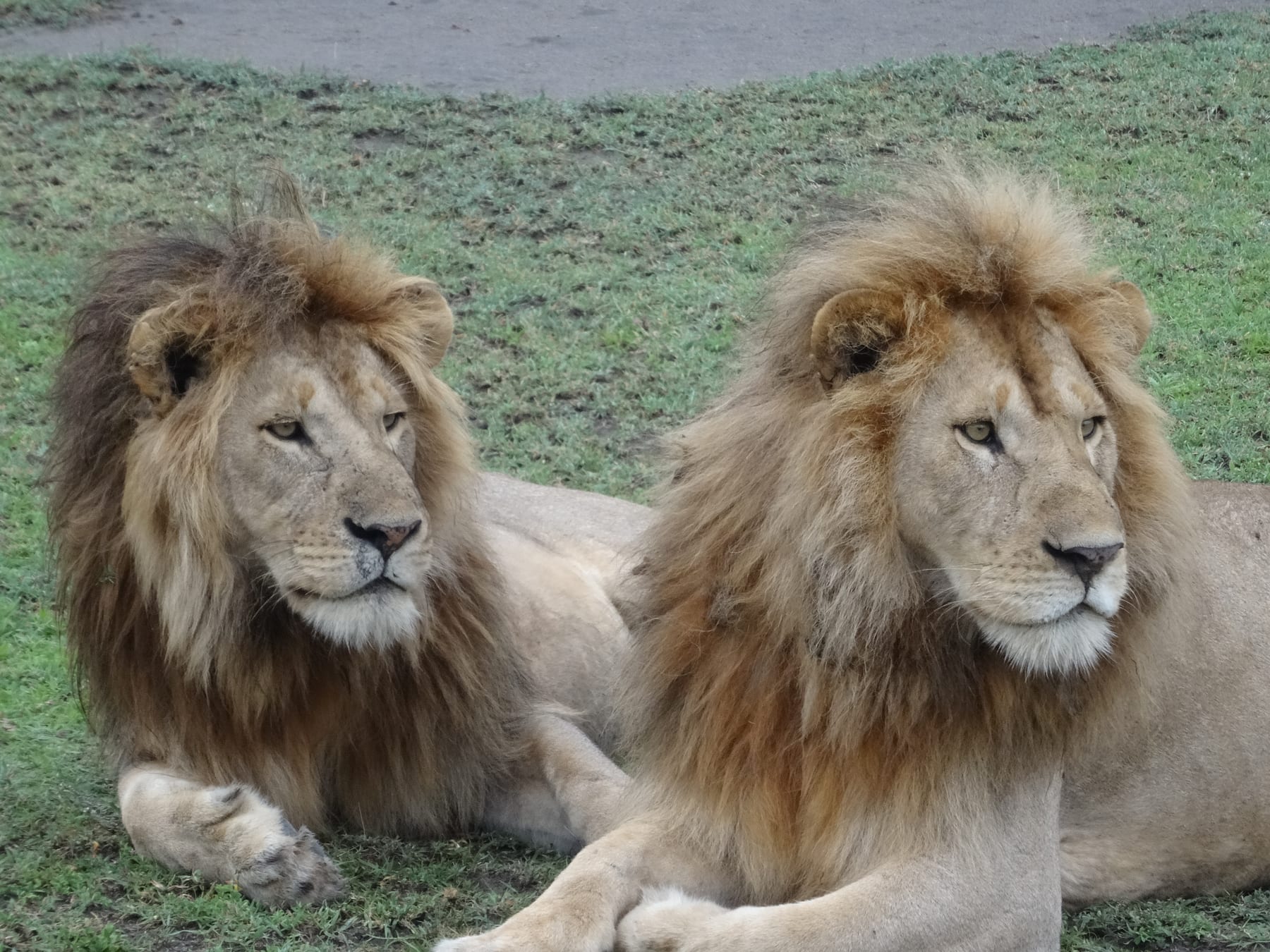
Giraffe calves are often killed by lions and other carnivores, while adults are usually big enough to escape. A mother has three possible strategies: hide her calf in thick bushes, stay in the open to see predators coming, or join a large group, where there are many eyes and each calf is less likely to be the one caught. In the areas with the most lions, groups with calves were found more often in dense bushes than in open grassland, and those groups were smaller. So giraffe mothers and calves seem to rely on hiding. This means dense bushland is important for giraffe calves and should be protected. Some cattle ranchers clear shrubs to grow more grass for their livestock, but they share the rangelands with giraffes and other animals that feed on shrubs.
We also looked at people. “Outside the parks the human population has been rapidly expanding in recent years,” says co-author Derek Lee of Penn State University, so natural giraffe habitat is more and more dominated by people. Interestingly, females with calves were more likely to be found close to bomas: the traditional compounds of livestock-keeping people who do not farm. “We suspect this is because the pastoralists may disrupt predator behaviors to protect their livestock—and this benefits the giraffe calves,” says Lee. Groups with calves did, however, avoid the busier towns of farming people. For a giraffe mother looking for food and safety, a traditional boma and a crowded town are clearly not the same thing.
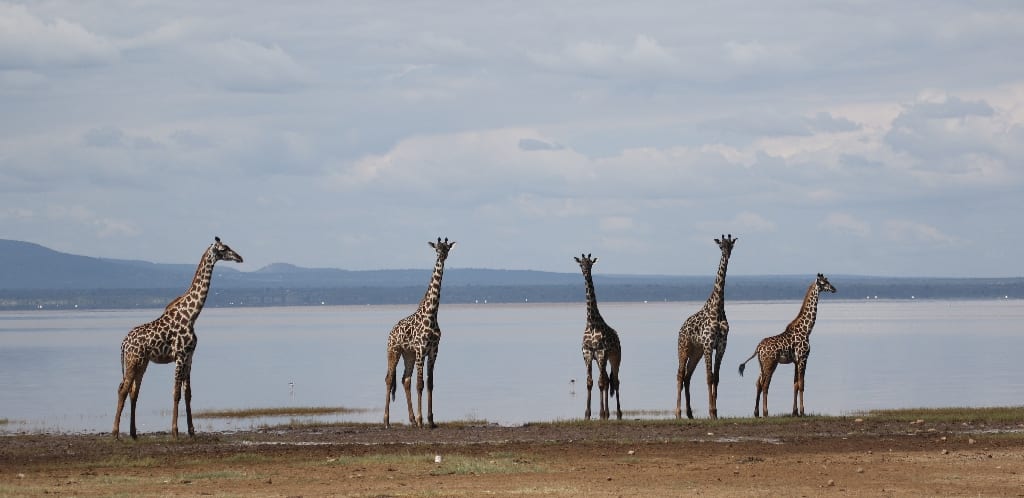
“We were happy to find that traditional human settlements by ranchers appear to be compatible with the persistence of giraffe populations,” says Monica. “But on the other hand, disturbances around towns likely represent a threat and should be limited in areas favored by giraffes.”
The study is part of the world’s largest giraffe research project, our Masai giraffe project, and used six years of seasonal surveys across a 2,000 square kilometre area. Learn more about giraffe research and conservation at the Wild Nature Institute.