Avoiding density stress with larger ponds
(translated from the original post on Swiss Biodiversity Forum)
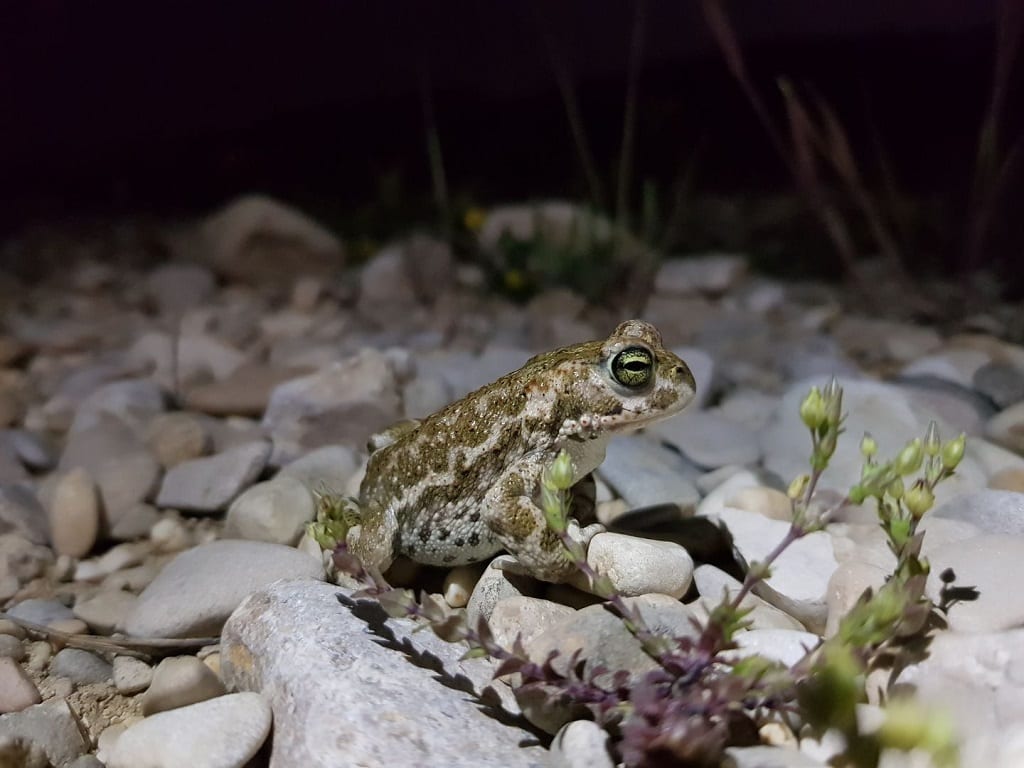
Conservationists are happy when there are many tadpoles in a pond. Yet at high density, tadpoles are stressed: they need longer to develop, are smaller when they turn into toads, and survive less well as young toads. To reduce this density stress, we need to build larger ponds.
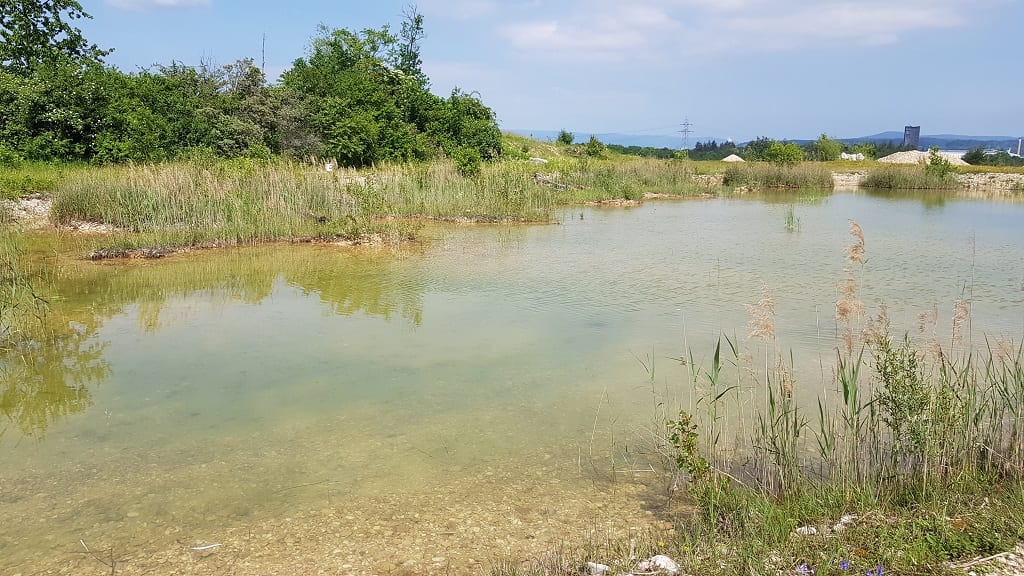
A high number of tadpoles in a pond is pleasing, but crowding can cause stress. In our new paper in Basic and Applied Ecology, led by Tobias Weber, we raised tadpoles of the natterjack toad at different densities in outdoor tanks. We show that such density stress doubles the larval period, the time a tadpole needs before it turns into a toad. A longer larval period increases the risk that the pond dries up before the tadpoles are ready to leave. Also, at high densities the tadpoles are more than 50 percent smaller when they turn into toads, and on land small toads survive poorly.
For the highly endangered natterjack toad, these findings are particularly problematic. To reduce density stress for this species, it is important to build large ponds (ideally with an area larger than 100 m²). Also, these ponds should dry up, but not until autumn. This can be achieved by building ponds that can be drained.
Our findings are also important for counting amphibians. In a pond with high tadpole density, the tadpoles are present throughout the summer, providing evidence that toads have bred there. In a pond with low tadpole density, the tadpoles turn into toads after just 20 days. As a consequence, breeding may go unnoticed.
More about our work on amphibian and reptile conservation.